Leak detection case studies, job by job.
Real jobs published by ADI Leak Detection, with the engineer, the town, the methods and the outcome as recorded. The pattern is consistent: most of a day is spent ruling systems out, and the find comes near the end.
Seven days a week, 7am to 9pm
- 4.7from 1,629 reviews of ADI Leak Detection
- No find, no feeon qualifying jobs
- £5mpublic liability
- AccreditedCIPHE, WIAPS, WaterSafe, SPATA
Every photograph below was taken on the job it sits beside and published by ADI Leak Detection with that case study. None is a stock image.
- Engineer
- Gabor Weber
- Where
- Oxford
Oxfordshire - Leak type
- Water mains
- Property
- Residential property
- Thermal imaging
- Damp meter
- Tracer gas
- Pressure testing
- Acoustic correlation
- Visual inspection
Damp in a corridor, and three circuits to rule out
Damp on a corridor floor with nothing visible above it. Pressure testing each circuit separately put the fault on the cold feed, and acoustic listening put it under the bathroom tiles.
The symptom
Damp on the wooden corridor floor, with a high damp meter reading over a thermal anomaly in the same spot. The pipework was around forty years old.
What was done
Thermal imaging first, to map the pipe runs under the floor. The heating was drained and filled with tracer gas, which found nothing at either damp area. Hot feed, heating circuit and cold feed were then pressure tested one at a time.
What was found
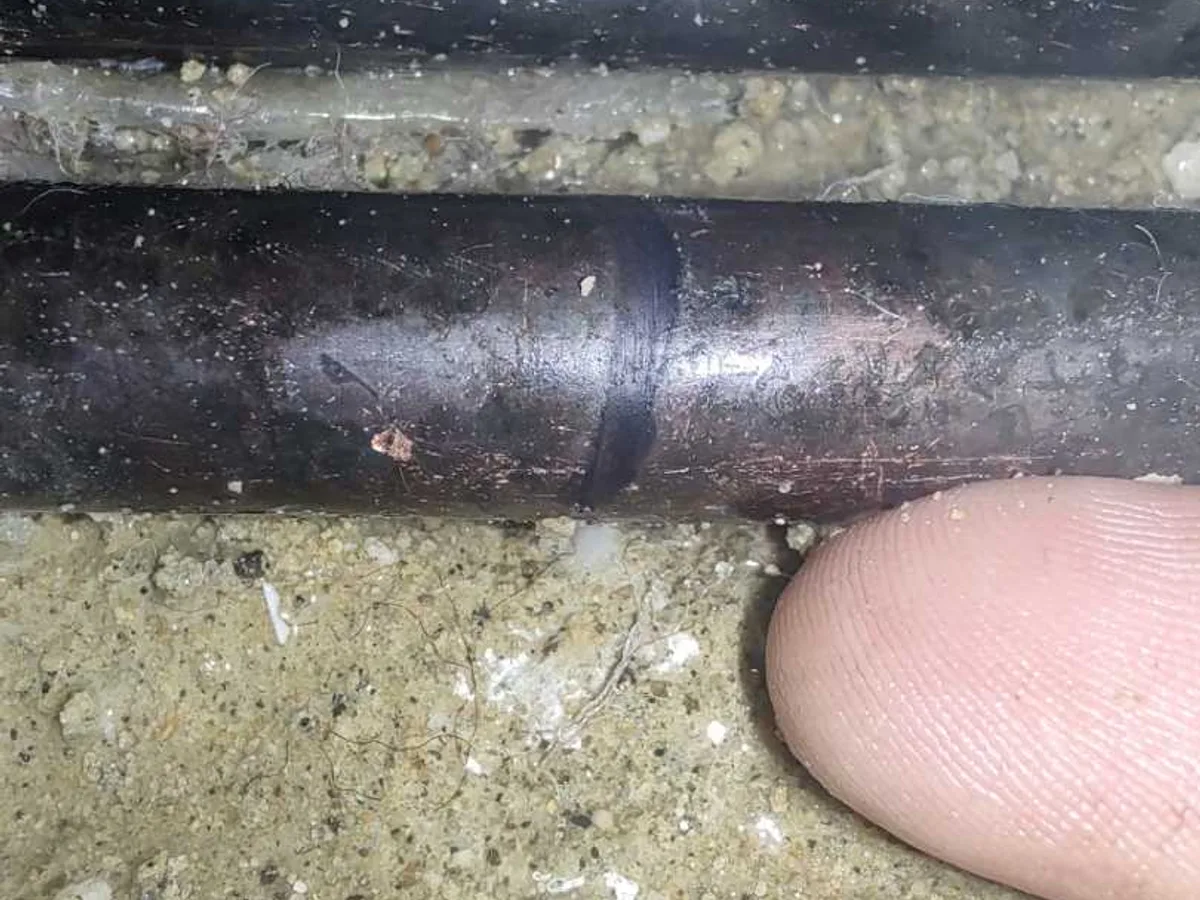
The hot feed and the heating held. The cold feed failed. Acoustic equipment over the bathroom floor gave an anomaly, and under the tiles was a leaking 15 mm copper pipe.
And then
The section was replaced in copper and the pipework pressure tested at 4 bar for twenty minutes, which held. The engineer noted the pipework had now failed twice at its age and recommended replacing the run in full.
Six methods applied to one property in a single day, which is only possible with the full day allocated to it.
OutcomeCold feed pipe leak found and repaired beneath bathroom floor.
- Engineer
- Matthew Barron
- Where
- Liverpool
Merseyside - Leak type
- Water mains
- Property
- Residential property
- Acoustic correlation
- Tracer gas
- Damp meter
- Pressure testing
- Visual inspection
A supplier leak notice and a failed stopcock
A leak notice from the supplier, wet walls in the garage, and an internal stopcock that would not shut the water off. Tracer gas and acoustic listening agreed on the same corner.
The symptom
Water damage to the garage wall and the kitchen wall next to it, and major movement on the meter micro dial with nothing running in the house.
What was done
With the stopcock passing water, the usual flow-off comparison was off the table. Tracer gas went in through a tap in the garage, and acoustic equipment listened for water movement through the structure.
What was found
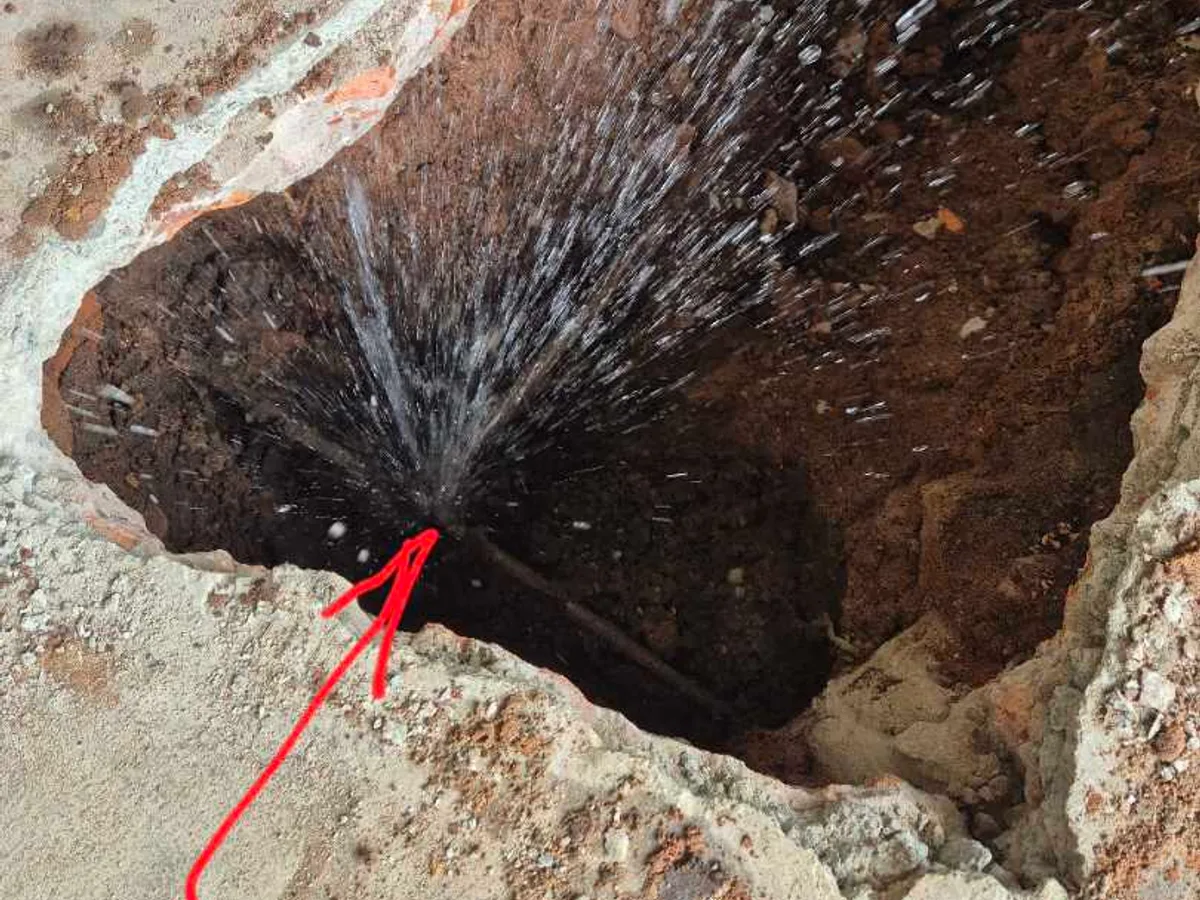
Gas came up in the garage, the acoustic trace agreed, and the concrete floor was opened at that point to expose the pipe.
And then
The pipe was repaired on the visit.
A failed stopcock removes the quickest test available. Every remaining method is slower, and a half-day booking would have expired before the floor was opened.
OutcomeUnderground mains leak found in garage, pipe repaired.
- Engineer
- Aaron Baker
- Where
- Camberwell, London
Greater London - Leak type
- Central heating
- Property
- Two-storey terraced home
- Moisture readings
- Thermal imaging
- Pressure testing
- Tracer gas
A bar of pressure every twelve hours
Heating pressure falling by about a bar every twelve hours, and damp in the bathroom where somebody had already had the floor up once.
The symptom
Falling heating pressure and damp in the bathroom, with part of the floor already opened by an earlier repair.
What was done
Moisture readings came back high but thermal imaging showed no clear anomaly. The boiler circuit was isolated and drained, then narrowed down with pressure testing and tracer gas.
What was found
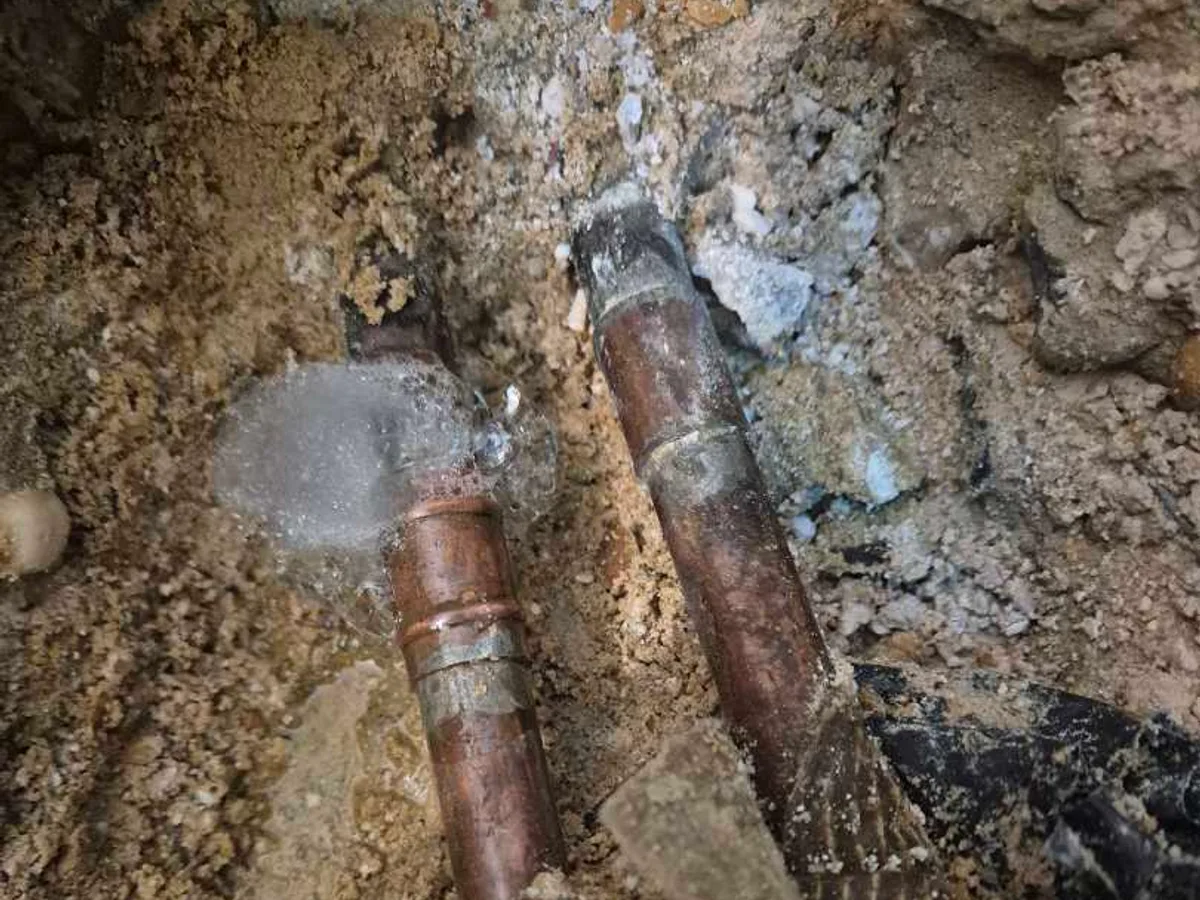
A leaking 15 mm copper fitting under the bathroom floor, close to the previous repair.
And then
The section was replaced with copper pipe and soldered couplers, then retested with no further leak. Heating and hot water were checked. The floor had to dry before retiling.
Thermal imaging returned nothing on this job. Methods that find nothing still take time, which is why the full day is allocated.
OutcomeFailed copper fitting found and replaced beneath the bathroom floor.
- Engineer
- James Bexter
- Where
- Marlborough
Wiltshire - Leak type
- Underfloor heating
- Property
- Residential property
- Pressure testing
- Acoustic correlation
- Visual inspection
No pressure held, and air audible through a wall
An underfloor circuit that would not hold two bar for a moment. Acoustic listening took it from "somewhere in the ground floor" to one corner of one room.
The symptom
The underfloor heating was losing pressure. Put on two bar with a compressor it held nothing, and escaping air could be heard through the wall opposite the test point.
What was done
The circuit was disconnected and pressurised with air, which gave a direction to work in. Acoustic equipment then followed the sound along the floor.
What was found
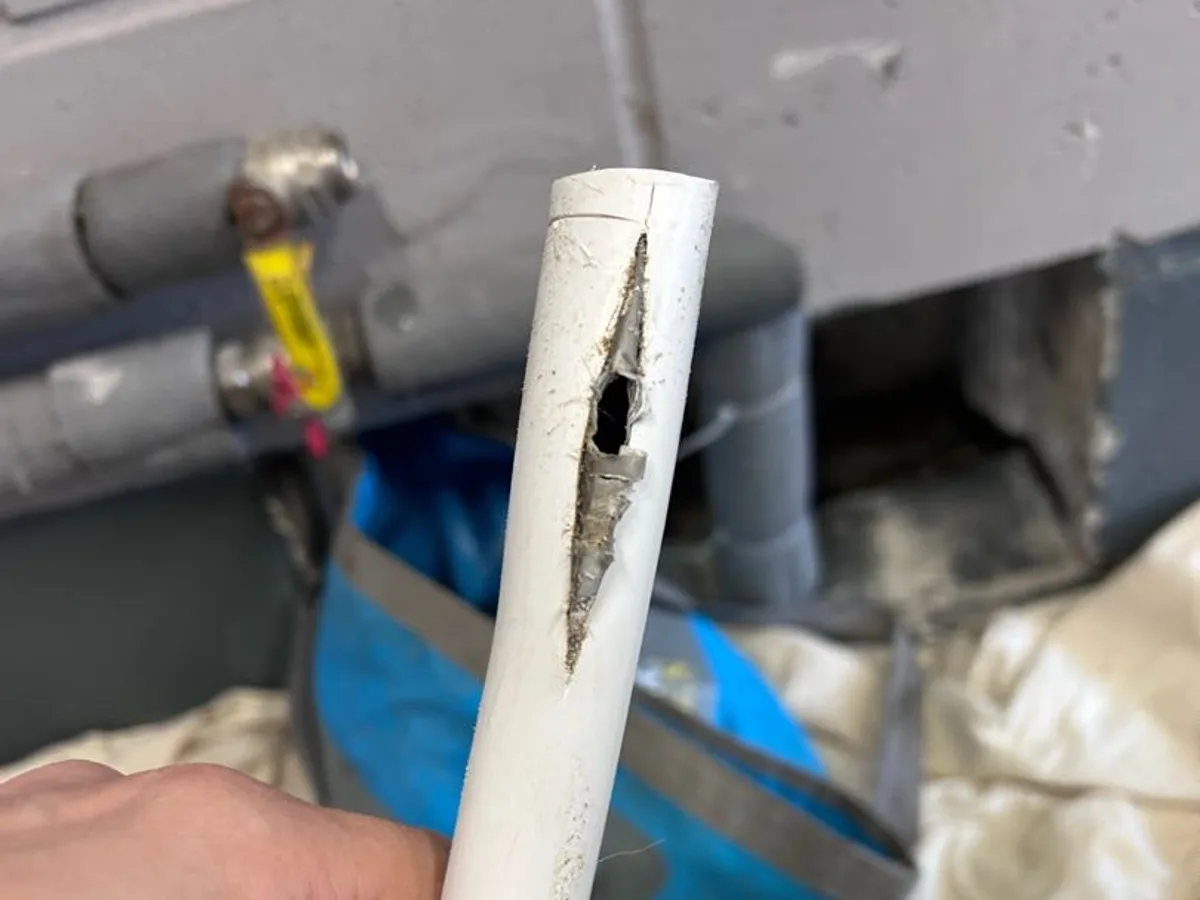
The leak was in 22 mm Speedfit PEX buried in the ground, in the corner of the office.
And then
A temporary repair was made at the leak, since John Guest do not recommend permanent fittings on buried plastic pipe of that type, and the customer was told so. The run back through the wall to the garage was replaced in copper at their request.
Buried plastic cannot be inspected visually, only listened for. Accurate location is the difference between one small opening and lifting a ground floor.
OutcomeLeak found in buried PEX pipework, corner of office room.
- Engineer
- Aaron Baker
- Where
- Otford
Kent - Leak type
- Drainage
- Property
- Semi-detached house
- Thermal imaging
- Pressure testing
- Tracer gas
- Damp meter
- Endoscope camera
- Leak dye
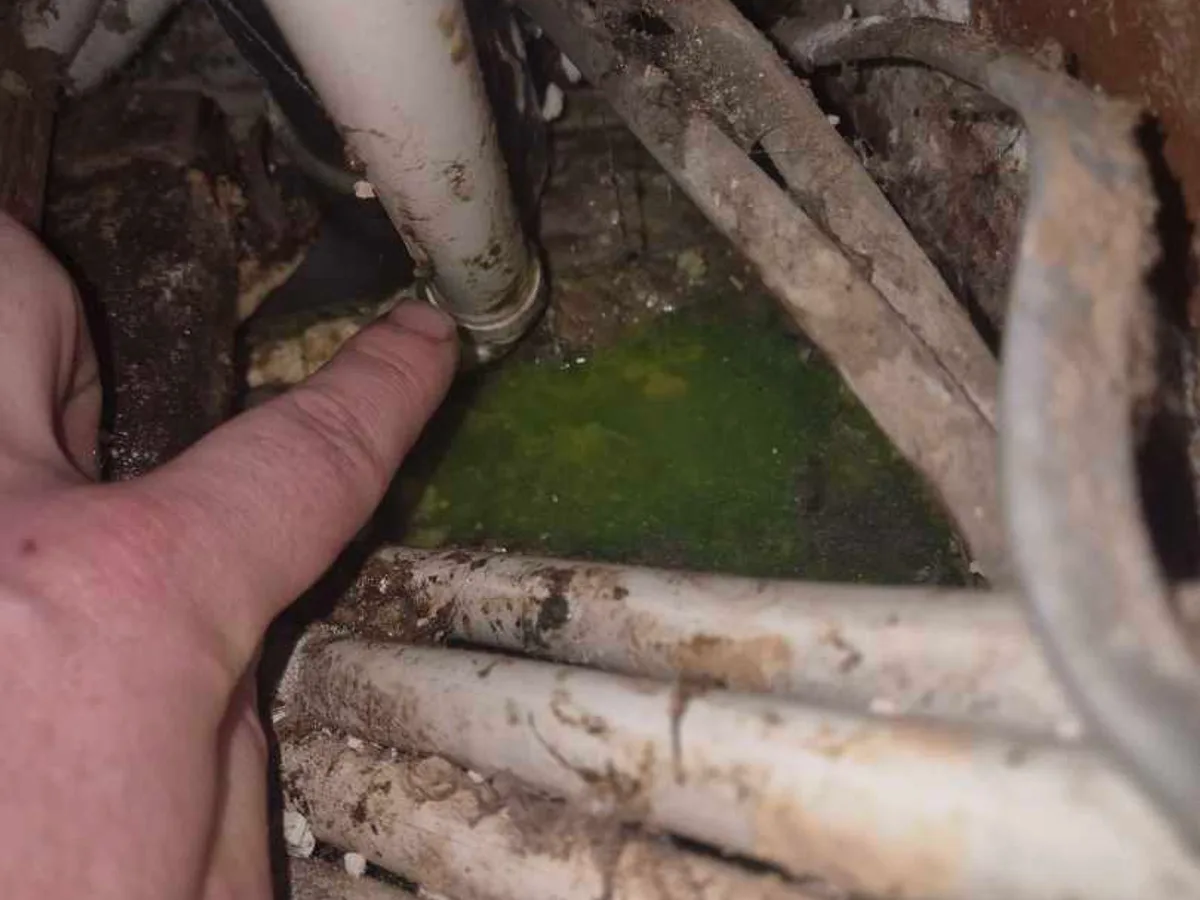
Supply and heating cleared, leaving the waste
A steady drip into a basement and a wet utility room floor above it. Supply, hot water and heating were all cleared before dye found the real culprit.
The symptom
Continuous dripping in the basement, visible damage to the utility room floor directly above, and elevated moisture readings in both.
What was done
Thermal imaging on the hot pipework found nothing. Pressure testing on hot and cold lost nothing. Tracer gas on the same systems gave no reading. An endoscope through the utility room floor confirmed moisture in the void, and dye went into the drainage.
What was found
The dye came through in the basement. The waste pipework was leaking at the corner of the utility room.
And then
The washing machine came out and a section of floor was excavated to reach the damaged pipe, which was repaired.
Four systems were eliminated before the fifth was tested. Elimination accounts for most of a leak investigation.
OutcomeWaste pipe leak found at utility room corner, repaired.
- Engineer
- Aaron Baker
- Where
- Whitstable
Kent - Leak type
- Hot water
- Property
- Home with an upstairs bathroom
- Visual inspection
- Pressure checks
- Endoscope camera
- Thermal imaging
A cracked ceiling, zero pressure, and a visible valve
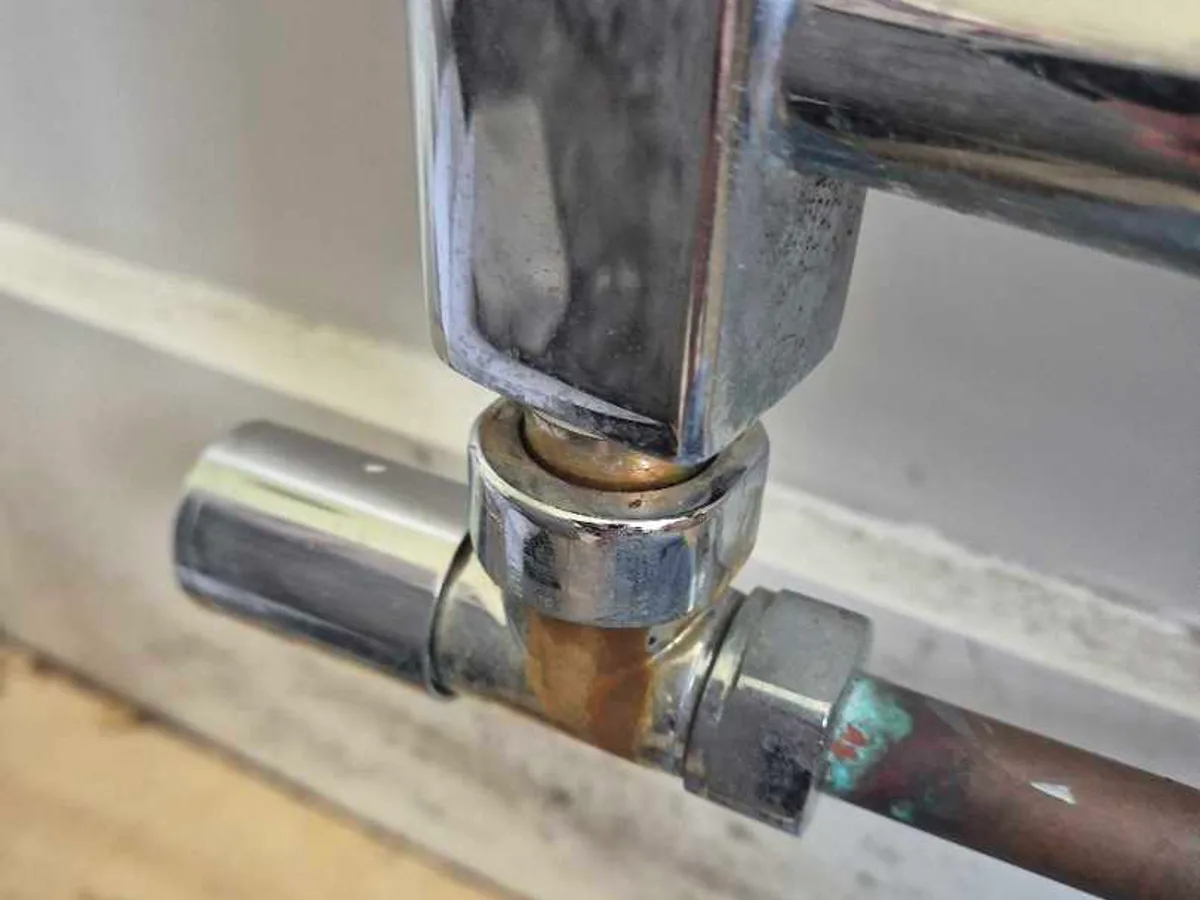
Not every job ends under a floor. Heating pressure was at zero and the ceiling below was stained, and the cause was a valve in plain sight upstairs.
The symptom
Cracking and water stains on the ground-floor ceiling, heating pressure at zero, and a small puddle under the towel radiator in the bathroom above.
What was done
The system was repressurised to test the valve, then an endoscope and thermal imaging checked the area and the pipework around it.
What was found
Water was escaping from the towel radiator valve.
And then
The valve was tightened, with no parts replaced. Further checks found nothing else, and the heating pressure held afterwards. The staining still had to be assessed and dried.
Checking what is visible before opening anything is the cheapest test available, and on this job it was sufficient.
OutcomeLeaking towel radiator valve tightened; pressure held after repair.
- Engineer
- Artur Sowa
- Where
- Marlborough
Wiltshire - Leak type
- Water mains
- Property
- Home with a basement
- Supply tracing
- Pressure testing
- Acoustic listening
Water in the basement, and no internal stopcock
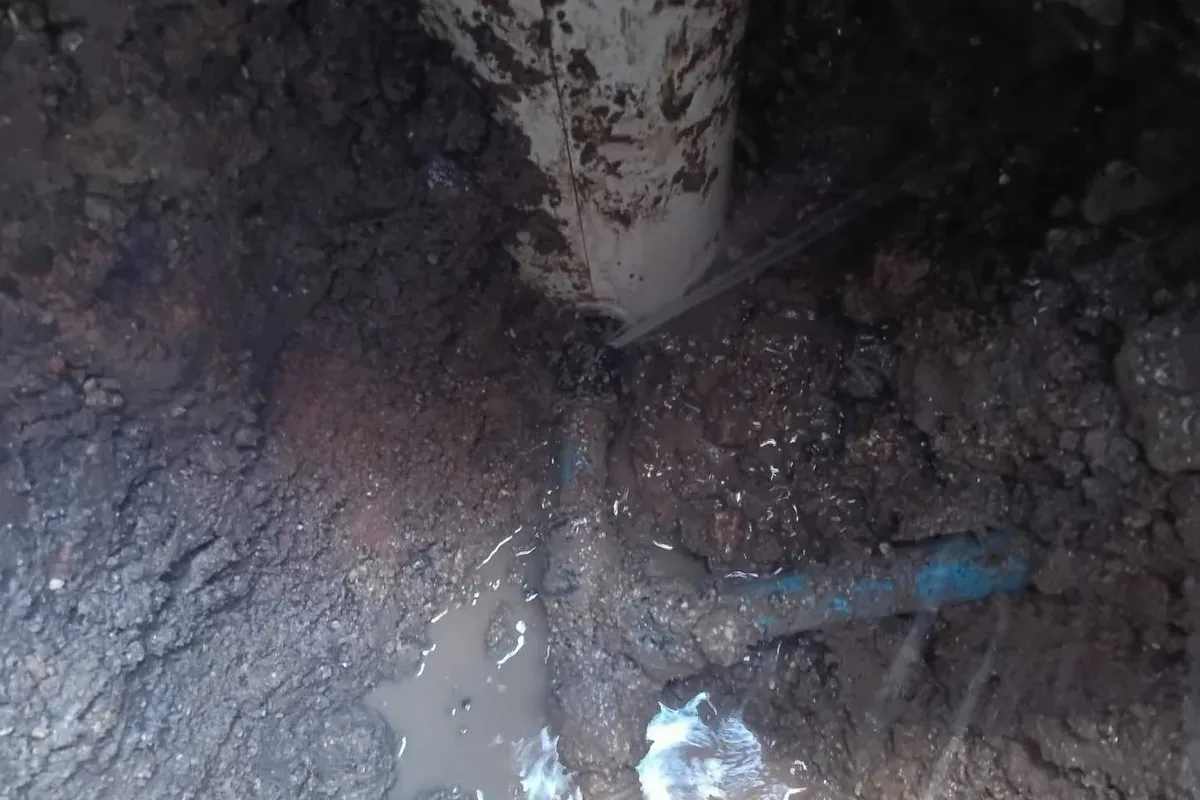
A flooded basement with the problem outside the house. Two meter boxes, a stopcock hidden in an old gas box, and a broken fitting between them.
The symptom
A flooded basement and no internal stopcock anywhere in the property.
What was done
The engineer identified two external meter boxes and a stopcock in an old gas box, then pressure tested and listened acoustically along the supply between the rear meter box and the external stopcock.
What was found
Excavation exposed a broken fitting on the outlet from the meter.
And then
The connection was rebuilt in 25 mm fittings and MDPE pipe, and the excavation backfilled and made safe. ADI’s published record covers the pipe repair; it does not describe drying or restoring the basement.
Locating the isolation points took the first hour of this job, which a shorter booking would not have allowed for.
OutcomeBroken meter outlet fitting found and rebuilt; basement flooding source removed.
- Engineer
- Danny O'Mahony
- Where
- Oxford
Oxfordshire - Leak type
- Swimming pool
- Property
- Residential property
- Hydrophone
- Leak locating dye
- Pressure testing
- Flow metering
- Visual inspection
Two litres a minute, and eight circuits that all held
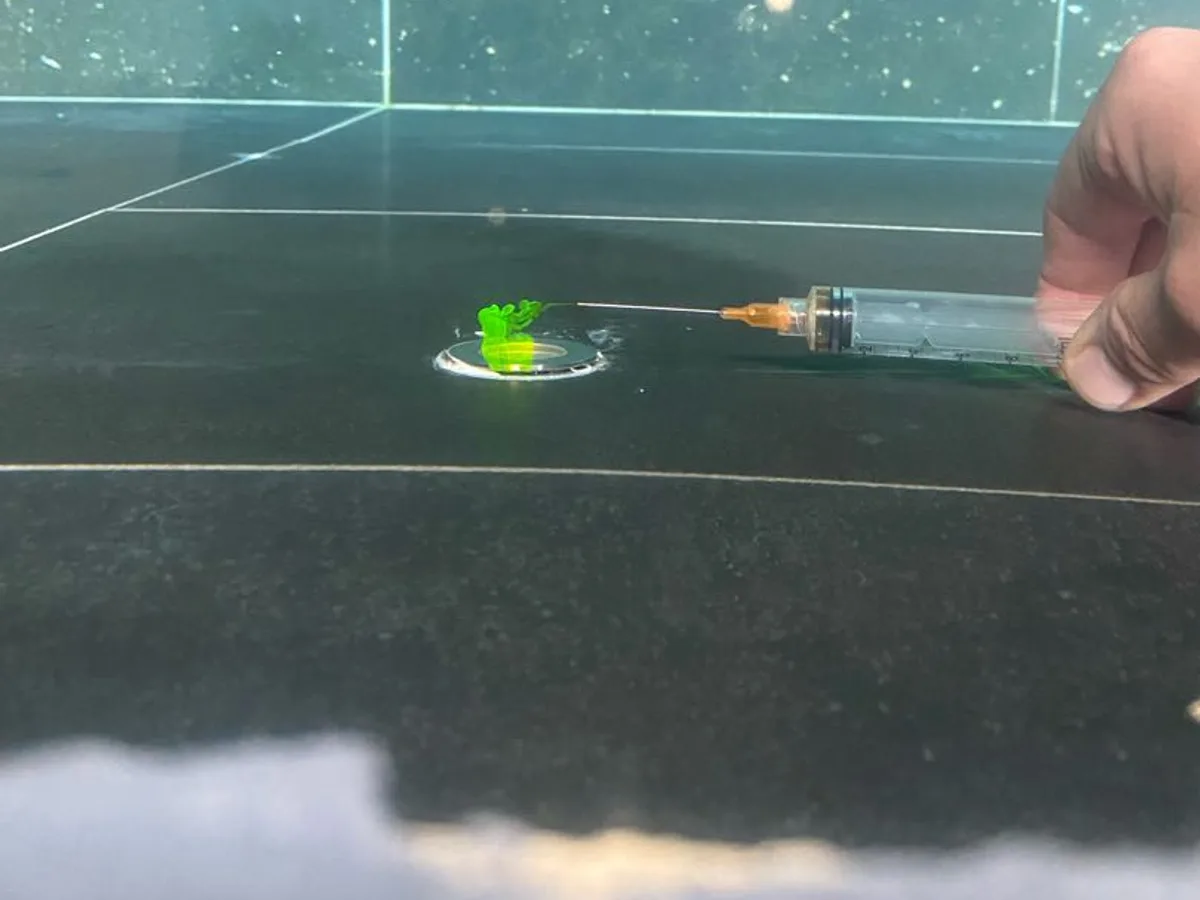
The auto fill never stopped running. Every pipe circuit was plugged and tested, all of them passed, and that left the light fittings.
The symptom
The auto fill valve running continuously at two litres a minute.
What was done
Every pool pipe connection was plugged and pressure tested at one bar for fifteen minutes each: vacuum line, main drain, skimmer, auto fill and three return segments. A hydrophone then listened to the shell and every pipe penetration.
What was found
All the pipework held. The light fitting nearest the steps was noisy, and dye applied around it was drawn into the wall. No other fitting moved dye.
And then
The silicone seals on several fittings were lifting, so all of them were re-sealed with epoxy putty.
Eight pressure tests at fifteen minutes each is two hours before any conclusion can be drawn. Pools are the clearest case for allocating a full day.
OutcomeLeak confirmed at pool light fitting near steps, sealed with epoxy putty.
Where these case studies came from.
Each job is summarised from a case study published by ADI Leak Detection. Engineer names, locations, leak types, detection methods and outcomes are as ADI publishes them. Nothing has been merged, embellished or invented, and where a published record stops short of describing a completed repair, so does the summary here.
Speak to the team that books the engineers.
One call confirms the earliest available date and the price, before you commit to anything.
- You describe what you have seen
- We find the nearest available engineer
- You get a date and a price before booking
Seven days a week, 7am to 9pm. Most home insurance covers the cost of finding a hidden leak.